
Here you can find answers to most of the common questions we get asked about seals. Can't find your question? Fill out the form below and we'll get back to you
What are the population effects of hunting Swedish seals?
Like whales and other marine mammals and unlike game animals like boar or deer, seal populations grow very slowly. That means any amount of hunting has a big impact on population size.
Our modelling has shown how sustained high hunting quotas could lead to population decline. All three Swedish seal populations; grey, harbour, and ringed seals, are at lower numbers than they were 100 years ago due to historic overhunting. Grey seals are still increasing but have health problems that can be linked to environmental pollution. Harbour seals increased during the early 2000s, but have started to decline over the last five years, likely due to overfishing and ecosystem changes. Ringed seals are likely negatively impacted by warm winters that make their breeding ice break up too early. As all three species are impacted by overfishing and environmental change, we recommend a precautionary approach with regards to hunting to avoid declines below the levels agreed upon by international law.
If I see a seal pup out of water should I put it back in?
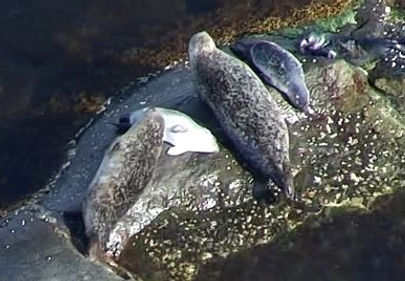
Seal pups are the same as human babies- they must sleep lots! It's important they rest lots on land. If you see a seal pup on land it's having a much needed rest, please do not put the pup back in water. It takes a small pup lots of energy to try to get back on land, which unfortunately can result in drowning if the pup is too weak.