
Research
Find out more about our main projects here
Funded by: Swedish Environmental Protection Agency
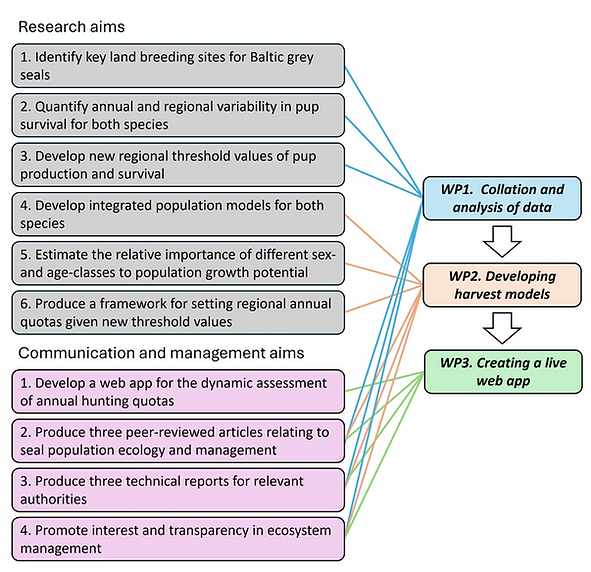
The grey seal populations in the Baltic Sea are below historical abundances, and at the same time hunting quotas are increased and poor ice winter conditions more common. In the current project we will develop a new so called ''population viability model'' PVA for grey seals to quantify the long term impact on population size from various stressors such as hunting, prey availability and climate. The outcome of the project will contribute to the Baltic Sea Action Plan and to the work for a Good Environmental Status within the HELCOM and ICES frameworks and provide a tool for County Counils (Länstyrelser) for evaluation of different hunting and management strategies, before implementation. The project will collaborate with different stake holders and aims to contribute to a long-term, sustainable management of the Baltic grey seal population.


Otoliths
eDNA
It is important to see how seals change their diet in response to the declining fish populations. We are using environmental DNA extracted from scats to help us learn what species they eat.



Östersjöns gråsälar mår inte bra, är deras immunförsvar nedreglerat av miljögifter?
Baltic grey seals display a worrying epidemiology of intestinal ulcers. Close to 100% of these seals have irritated intestines and 20% feature severe chronic infections and ulcers; a phenomenon not present in comparable Atlantic populations. Indications point at inadequate immune response to parasite infections, correlating with high environmental levels of persistent organic pollutants (POP’s). We will investigate if immune function is attenuated following the chronic exposure to pollutants that plague Baltic wildlife. Using 50 years of samples from a unique biobank at Naturhistoriska riksmuseet we will quantify the degree of epigenetic modifications on key immune-related genes. Methylation levels will be correlated to levels of blubber contaminants and disease risk. The proposed study will provide a novel systems level answer to why Baltic grey seals are at risk of this unique disease and will increase our understanding of the effects of bioaccumulation of POPs.

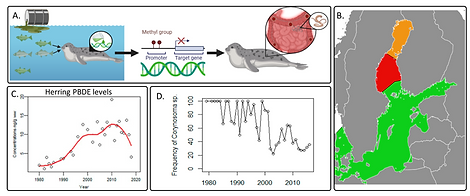
Fig 1 A. PBDE exposure likely elicits epigenetic modifications to immune related genes, resulting in a diminished immune system. This diminished immune system may result in intestinal inflammation causing the symptoms of Baltic seal disease. B. 43% of seals from the Bothnian sea (red) were found to have ulcers. 38% of Bothnian bay (orange) seals featured ulcers and 23% of seals from the Baltic proper (green) were found to have ulcers. C. Many persistent organic compounds have declined in Baltic biota, but several flame retardants remain high in fish species. D. Frequency of grey seals with acanthocephalan parasite infection remains elevated.
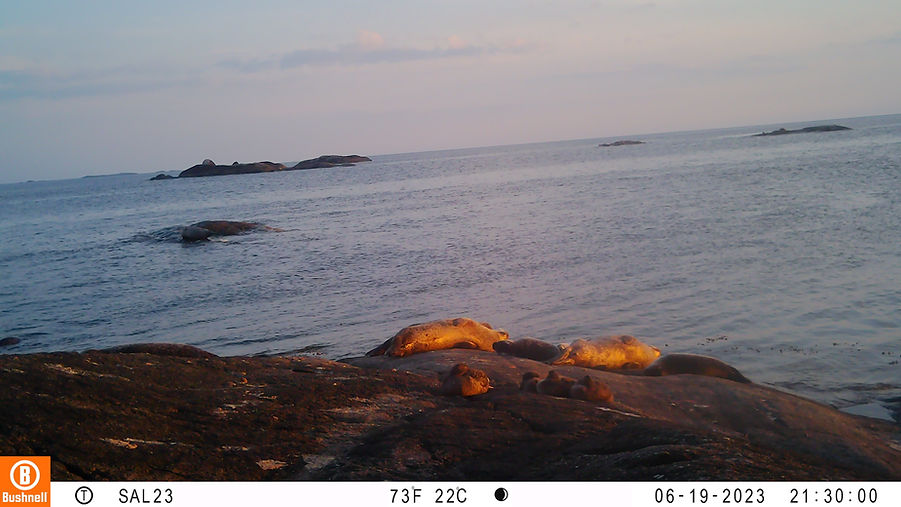
Welfare of lactating harbour seals
We are studying the welfare, and trade-off's made my seal mothers during pupping. Here, we deploy camera traps for an insight into their secret lives.
